orthorhombic Boroaluminosilicates
Kornerupine
Formula (Mg,Fe2+)4Al6(Si,Al,B)5O21(OH)
Crystal Structure
 #! Species: Kornerupine
#! System: Orthorhombic (mmm)
#! Habit: Elongated prismatic with strong trichroism
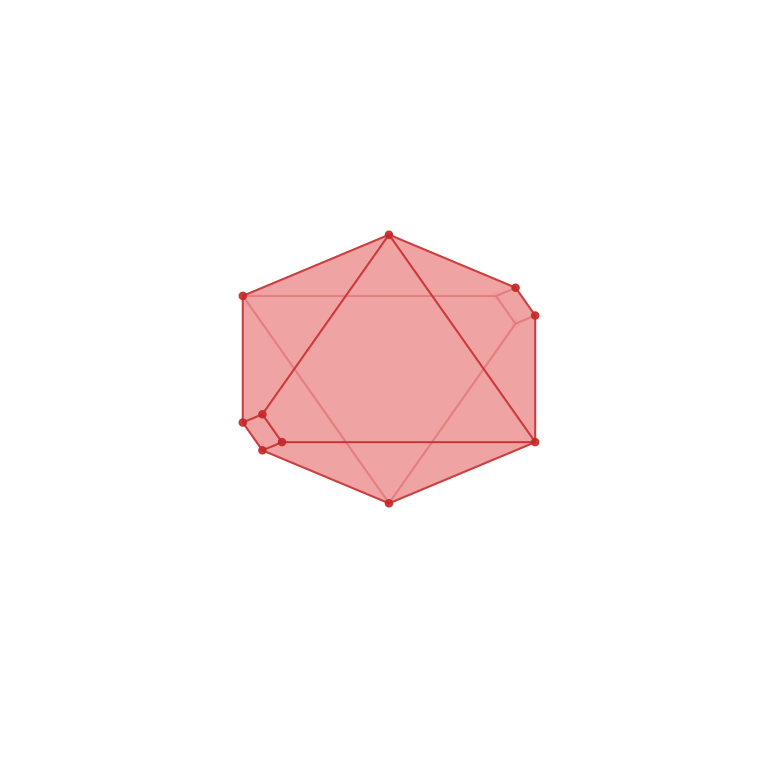
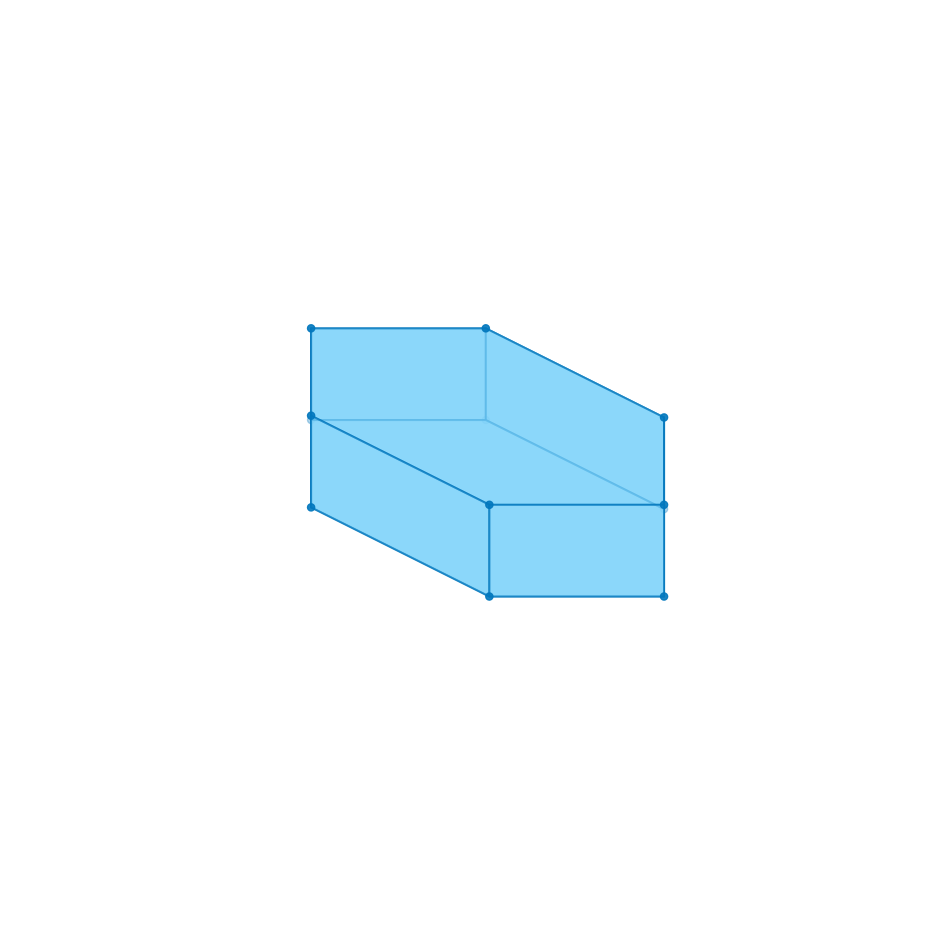
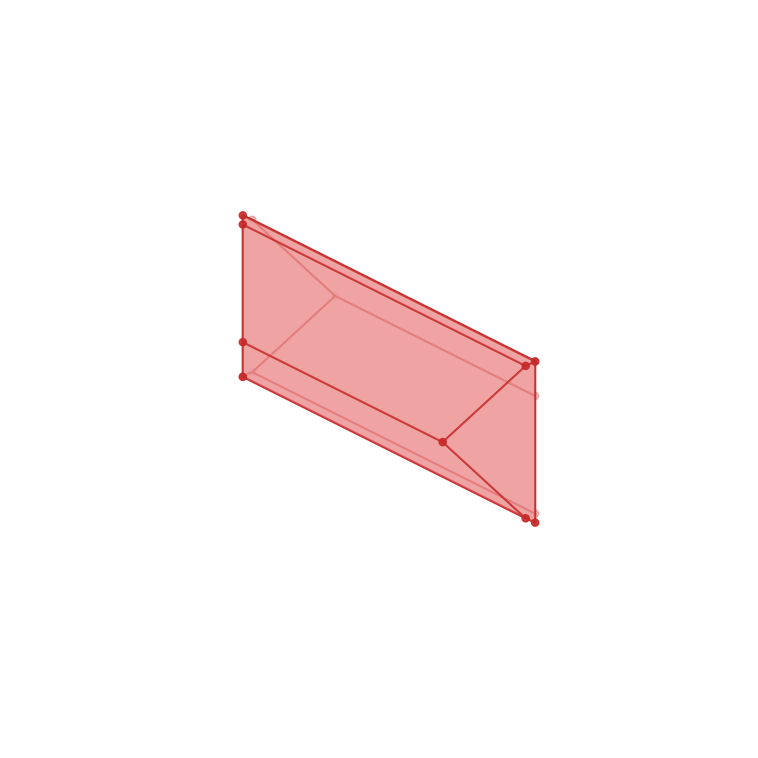
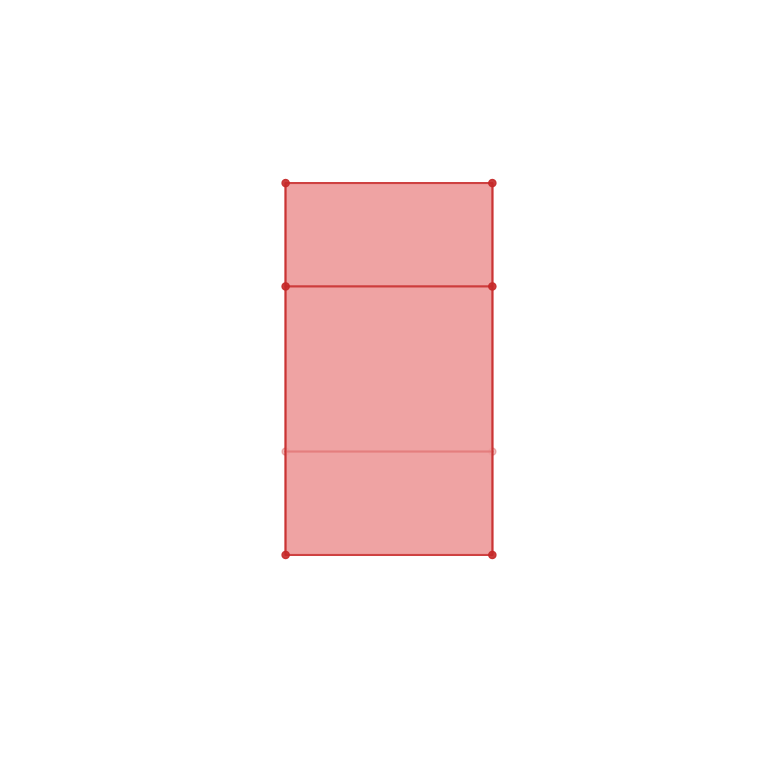
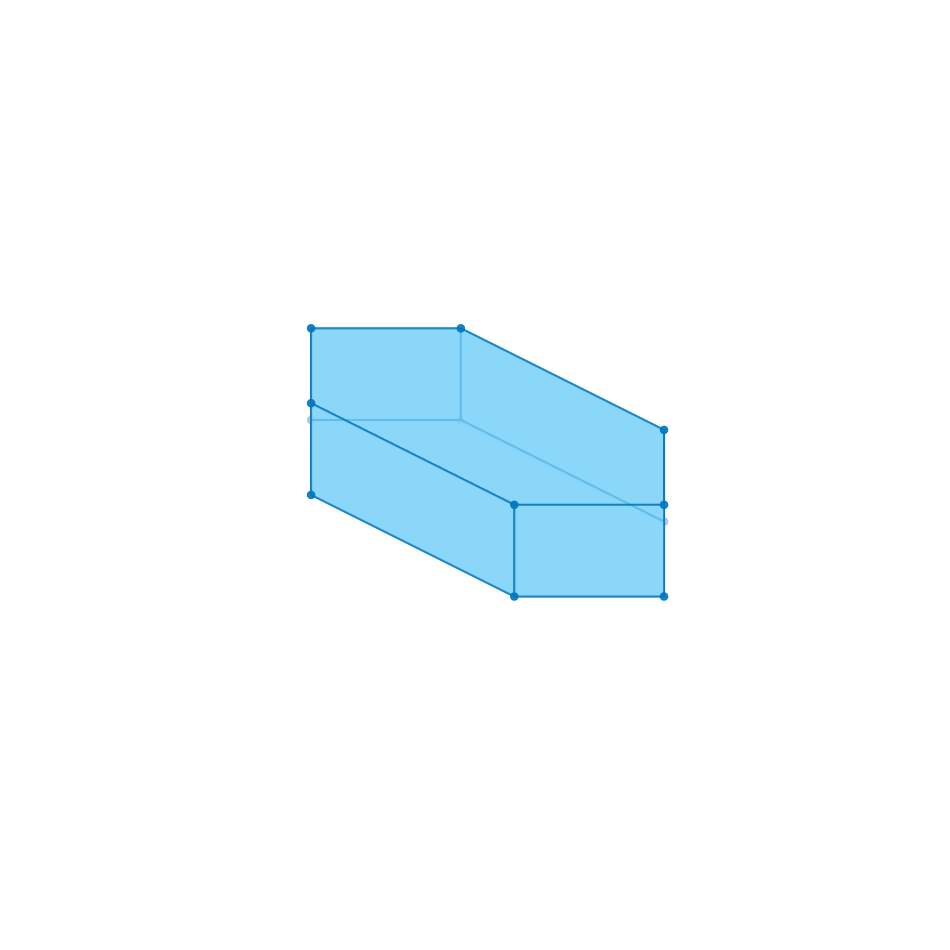
orthorhombic[mmm]:{110}@1.0 + {010}@0.6 + {001}@0.4
orthorhombic
mmm
{110} {010} {001}
Quick Facts
Hardness
6.5
Specific Gravity
3.27
Refractive Index
1.661
Optical Character
Biaxial -
Physical Properties
- Crystal System
- orthorhombic
- Hardness (Mohs)
- 6.5
- Specific Gravity
- 3.27
- Cleavage
- Imperfect parallel to prism
- Fracture
- Conchoidal to uneven
- Lustre
- Vitreous
Optical Properties
- Refractive Index
- 1.661
- Birefringence
- 0.010-0.013
- Optical Character
- Biaxial -
- Pleochroism
- strong: Green / Yellow (Third direction red-brown; Sri Lanka material may show green/colourless/yellow-brown trichroism)
Characteristics
Colours
GreenYellowish-greenBrownRarely colourless
Localities
Sri Lanka (primary; alluvial gravels, Elahera, Ratnapura)Madagascar (gem-quality transparent green)Tanzania (gem material; cat's-eye variety)Myanmar (Burma; minor)Greenland (type locality; large crystals mostly opaque; named for geological explorer Kornerup)
Common Inclusions
[object Object]Liquid inclusions; growth planesOccasional mineral inclusions
Known Treatments
None known in trade
Crystal Forms
prismpinacoid
Diagnostic Features
Strong trichroism (green/yellow/red-brown) — primary diagnostic; clearly visible in dichroscope; biaxial negative; SG 3.27-3.45; RI 1.661-1.683; cat's-eye variety from Sri Lanka and Tanzania
Notes
Mg-Al-Fe boroaluminosilicate; orthorhombic mmm; complex formula with IMA species kornerupine (<=0.5 B per formula unit) and prismatine (>0.5 B; separate IMA species since 1997). Optical constants and cat's-eye kornerupine from Sri Lanka confirmed by Zwaan 1996, Gems & Gemology 32(4):262-269 (DOI 10.5741/gems.32.4.262) [VERIFIED]. Elahera gem field confirmed by Gunawardene & Rupasinghe 1986 (DOI 10.5741/gems.22.2.80) [VERIFIED]. Gem localities by Shigley et al. 2000 (DOI 10.5741/gems.36.4.292) [VERIFIED]. Strong trichroism (green/yellow/red-brown) is the primary field diagnostic; "immediately recognisable under the dichroscope." Colour cause: Fe2+ (green); Cr3+ in intensely green stones. Cat's-eye variety: fibrous hollow tubes parallel to c-axis.
Related Minerals
Other minerals in the orthorhombic system