orthorhombic Nesosilicates
Andalusite (Chiastolite (Andalusite variety))
Formula Al2SiO5
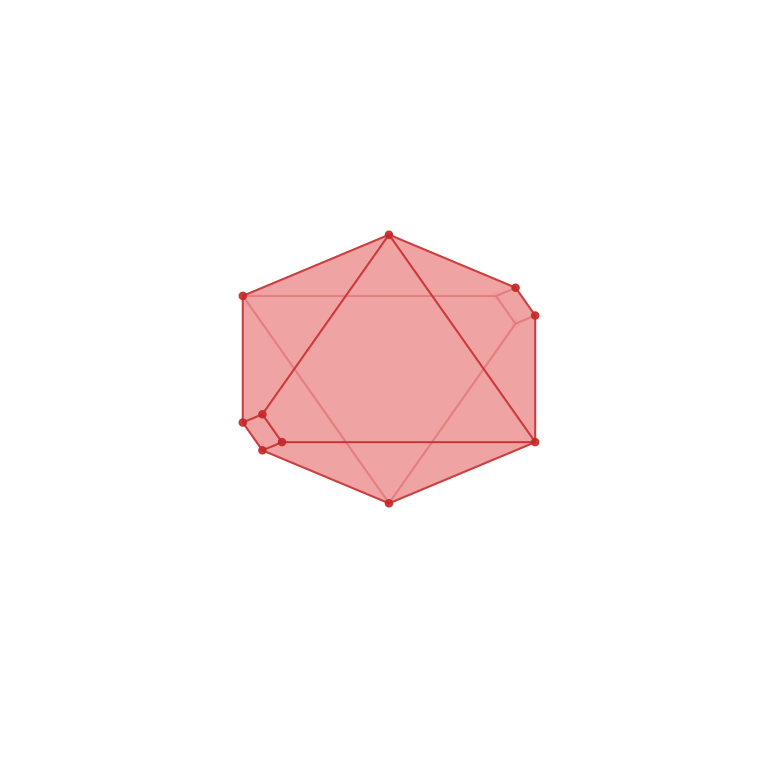
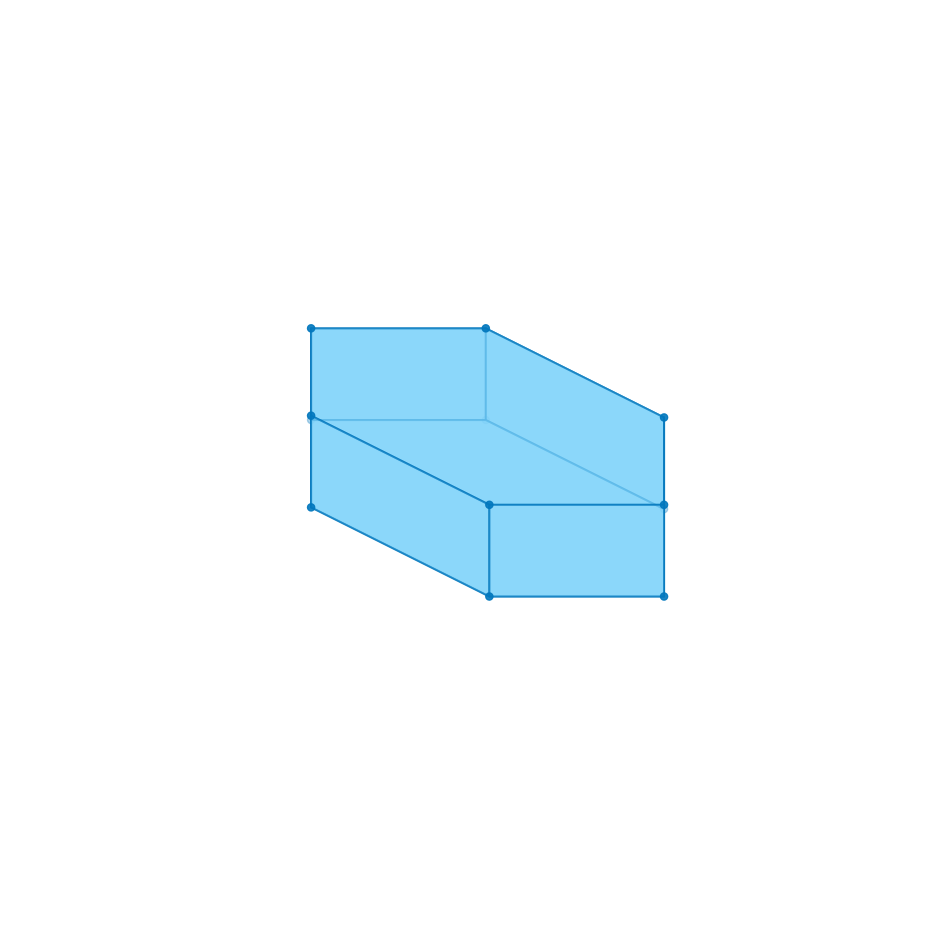
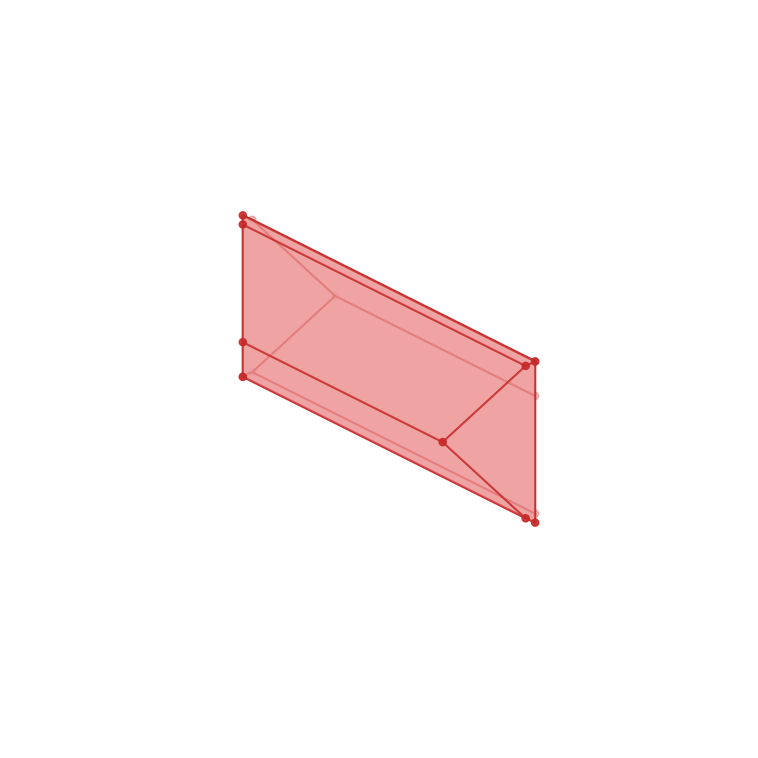
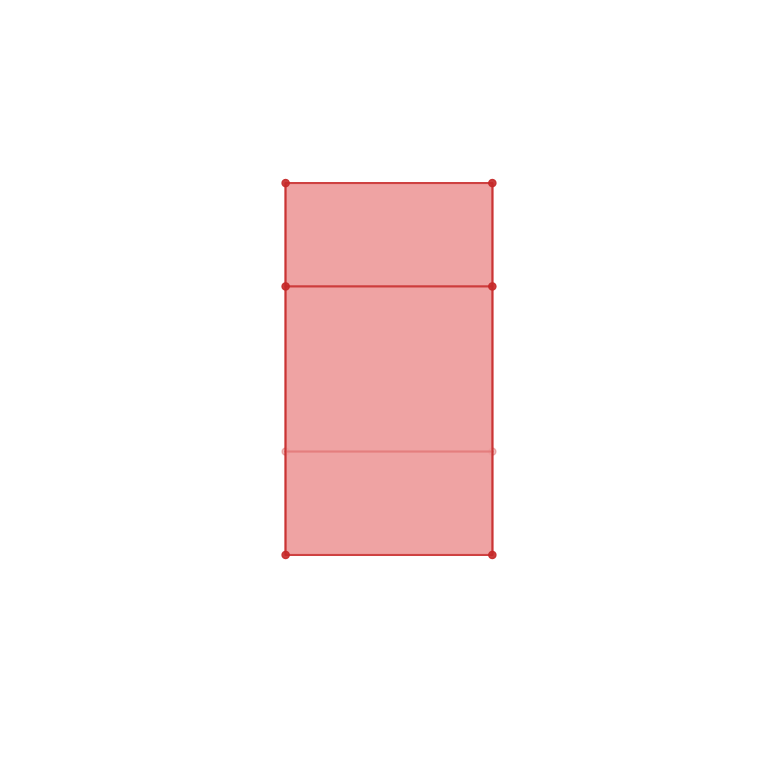
Crystal Structure
 #! Species: Chiastolite (carbonaceous Andalusite)
#! System: Orthorhombic (mmm)
#! Habit: Prismatic with cross-shaped carbonaceous inclusions
orthorhombic[mmm]:{110}@1.0 + {010}@0.7[inclusion:carbonaceous_cross] + {001}@0.9
orthorhombic
mmm
{110} {010} {001}
Quick Facts
Hardness
7.0
Specific Gravity
3.13
Refractive Index
1.629
Optical Character
Biaxial -
Physical Properties
- Crystal System
- orthorhombic
- Hardness (Mohs)
- 7.0
- Specific Gravity
- 3.13
- Cleavage
- Distinct prismatic {110} in two directions at ~90°
- Fracture
- Uneven to conchoidal
- Lustre
- Vitreous
Optical Properties
- Refractive Index
- 1.629
- Birefringence
- 0.007-0.013
- Optical Character
- Biaxial -
- Dispersion
- 0.016
- Pleochroism
- strong: Dark red to reddish-brown / Olive green to yellowish-green (Third direction orange to brownish-yellow; trichroism visible in dichroscope; "The strong trichroism of andalusite — with dark red, olive green, and orange-yellow visible through the dichroscope — is the single most diagnostic optical feature of this species")
Characteristics
Colours
Yellow-greenOlive greenBrownish-redReddish-orangeGreenish-brown
Localities
Brazil (Minas Gerais; primary source of transparent gem-quality)Sri Lanka (alluvial; lighter tone)Spain (Almeria, Castile; chiastolite variety)MadagascarUSA (California; chiastolite variety)
Common Inclusions
[object Object][object Object]Apatite or mica inclusions (metamorphic paragenesis)
Known Treatments
Generally not treated
Crystal Forms
prism
Diagnostic Features
Strong trichroism (dark red/reddish-brown + olive green to yellowish-green + orange to brownish-yellow) — the single most diagnostic optical feature; chiastolite cross-section (carbonaceous inclusions in symmetrical cross pattern in some crystals)
Notes
Al2SiO5 nesosilicate; one of three Al2SiO5 polymorphs (andalusite, kyanite, sillimanite). Orthorhombic mmm; biaxial negative with 2V ~85°. Strong trichroism (X = dark red, Y = olive green, Z = orange-yellow) is primary diagnostic. Chiastolite is the carbonaceous variety showing a symmetrical cross in cross-section. Gemmological constants confirmed by Fernandes & Choudhary 2009, Gems & Gemology 45(2):120-129 (DOI 10.5741/gems.45.2.120) [VERIFIED]. Colour cause: Fe3+ substitution producing pleochroic absorption pattern. Two cleavage directions at ~90°; avoid hard impacts. Standard gem material from Brazil; chiastolite as collector's item from Spain.
Related Minerals
Other minerals in the orthorhombic system