orthorhombic Oxides
Alexandrite
Formula BeAl2O4:Cr
Crystal Structure
 #! Species: Alexandrite (Chrysoberyl)
#! System: Orthorhombic (mmm)
#! Habit: Prismatic with colour-change phenomenon
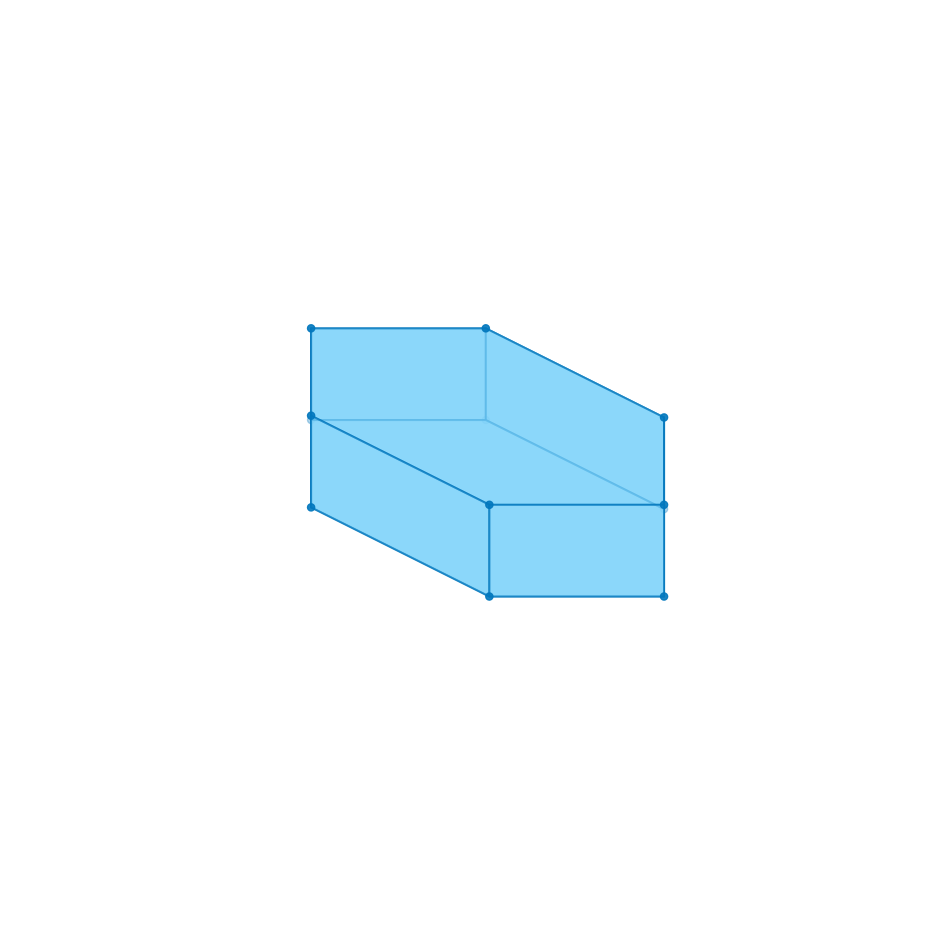
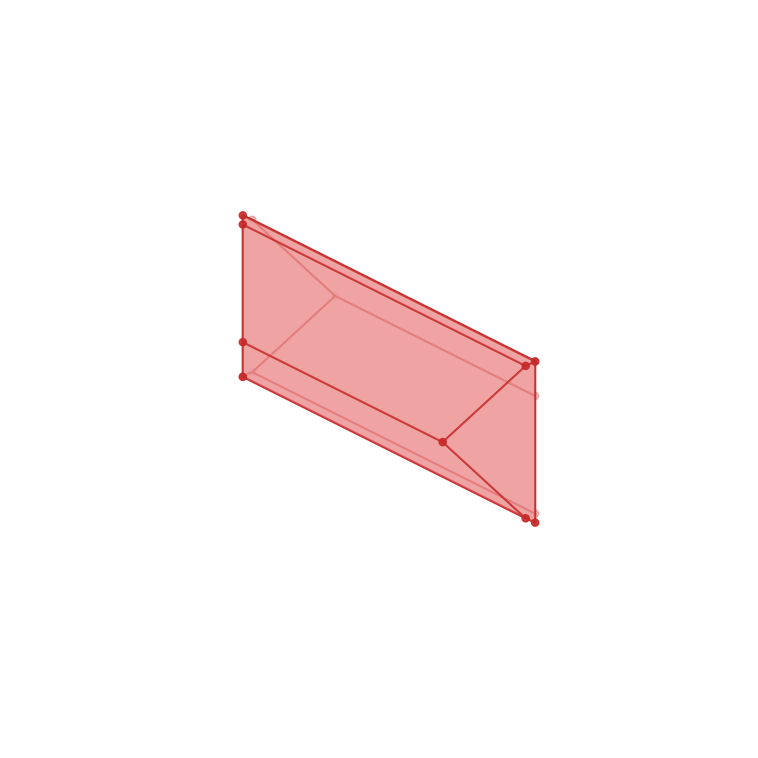
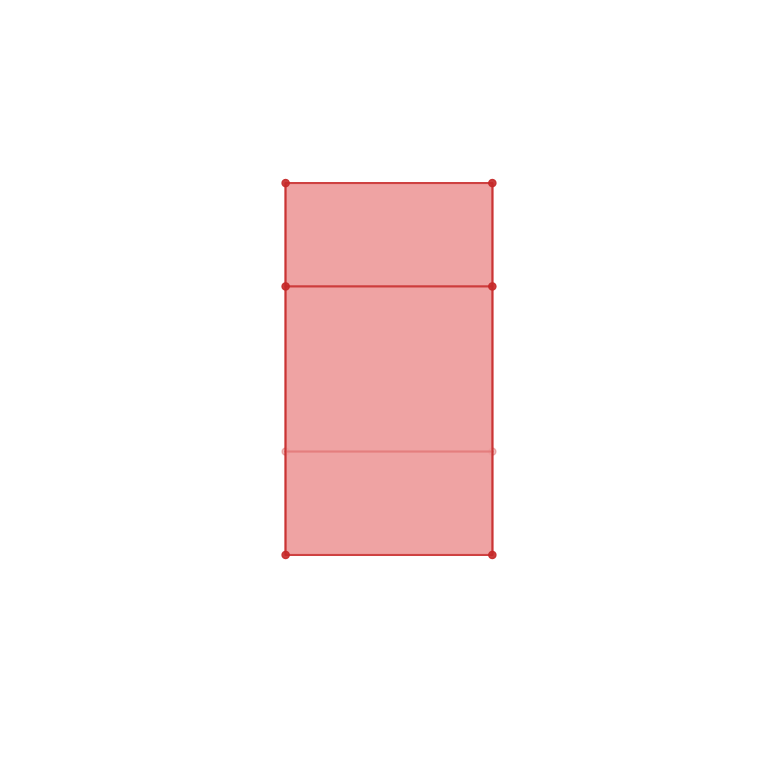
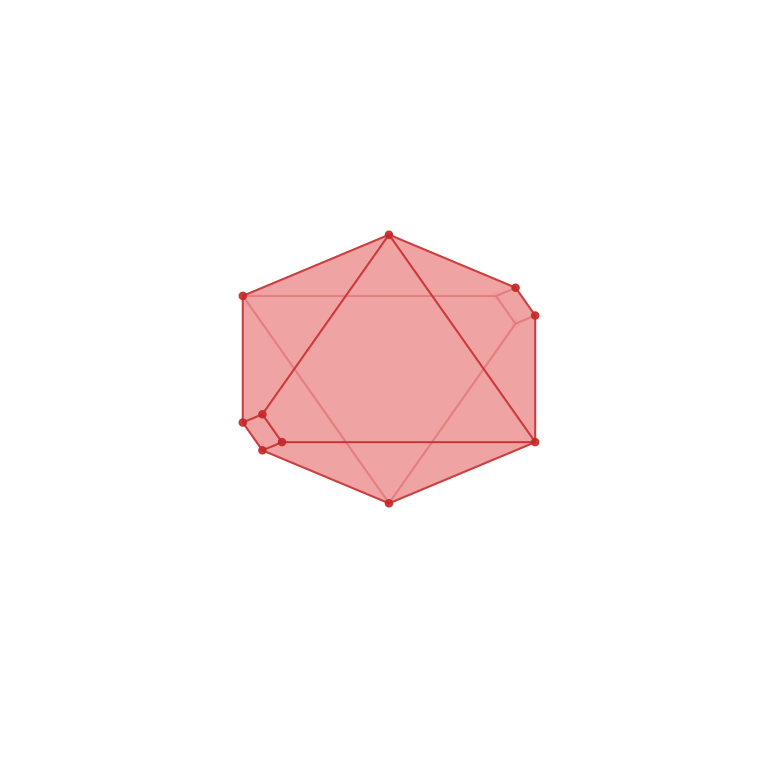
orthorhombic[mmm]:{110}@1.0 + {010}@0.6 + {111}@0.4 | phenomenon[colour_change]
orthorhombic
mmm
{110} {010} {111}
Quick Facts
Hardness
8.5
Specific Gravity
3.71
Refractive Index
1.746
Optical Character
Biaxial +
Physical Properties
- Crystal System
- orthorhombic
- Hardness (Mohs)
- 8.5
- Specific Gravity
- 3.71
- Cleavage
- Good in one direction
- Fracture
- Conchoidal to uneven
- Lustre
- Vitreous
Optical Properties
- Refractive Index
- 1.746
- Birefringence
- 0.008-0.010
- Optical Character
- Biaxial +
- Dispersion
- 0.015
- Pleochroism
- strong: Green / Orange-yellow / Red-purple (Three distinct pleochroic colours visible through dichroscope; separate from colour-change)
- Fluorescence
- Weak red (LWUV)
Characteristics
Colours
Green to blue-green (daylight)Red to purple-red (incandescent)Yellow-green
Localities
Russia (Urals)BrazilSri LankaTanzaniaIndia
Common Inclusions
Silk (needle inclusions)FingerprintsCyclic twin planesCrystal inclusionsNegative crystals
Crystal Forms
prismpinacoid
Diagnostic Features
Colour change (daylight green to incandescent red); strong pleochroism (three colours)
Synthetics & Simulants
Known synthetic and simulant versions of Alexandrite
Flux-Grown Alexandrite (Crystal) synthetic
Flux (molybdate Or Vanadium-based Flux Solvent In Platinum Crucible; Slow-cooling Crystallisation)
Hydrothermal Alexandrite (Crystal) synthetic
Hydrothermal (autoclave; Aqueous Mineraliser Solution; Seed Plate Of Natural Or Synthetic Chrysoberyl; Growth Over Weeks At High T/P)
Synthetic Alexandrite (Czochralski Boule) synthetic
Czochralski
Related Minerals
Other minerals in the orthorhombic system