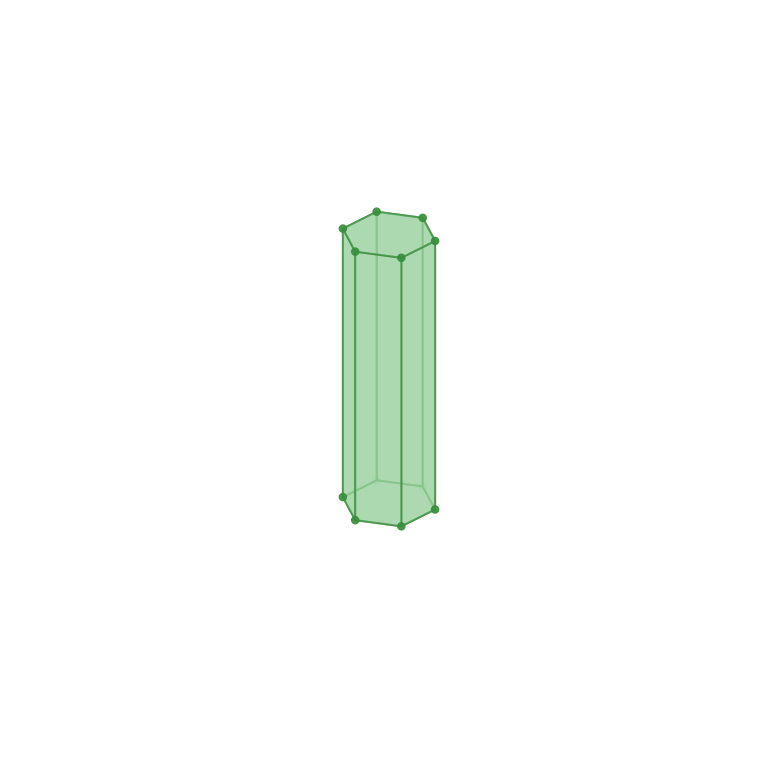
hexagonal Synthetic synthetic emerald (overgrowth on natural seed)
Lechleitner Emerald (Overgrowth) (Overgrowth Crystal)
Formula Be3Al2Si6O18:Cr,V
Crystal Structure
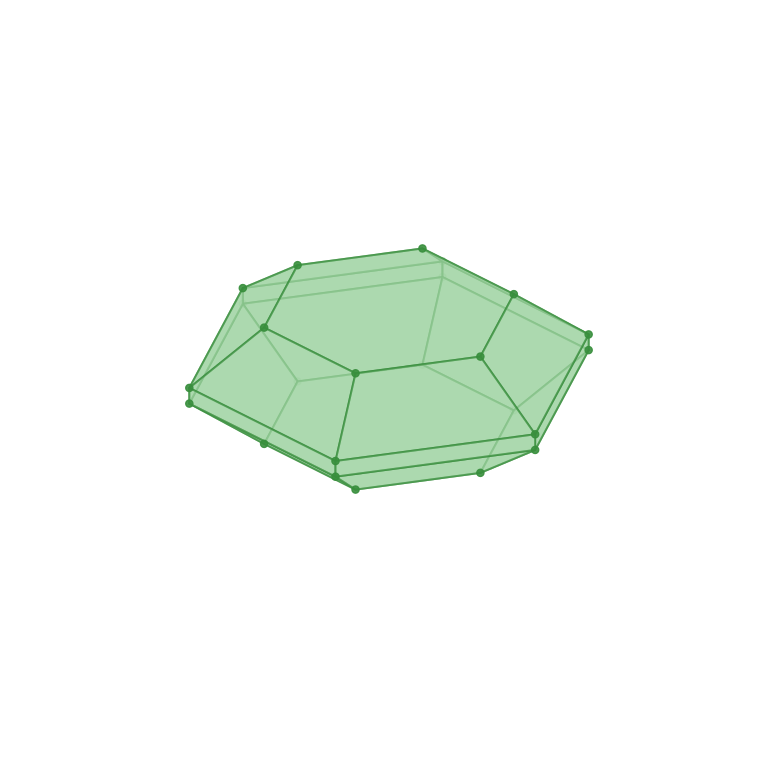
 #! Species: Lechleitner Emerald (synthetic overgrowth on natural beryl seed)
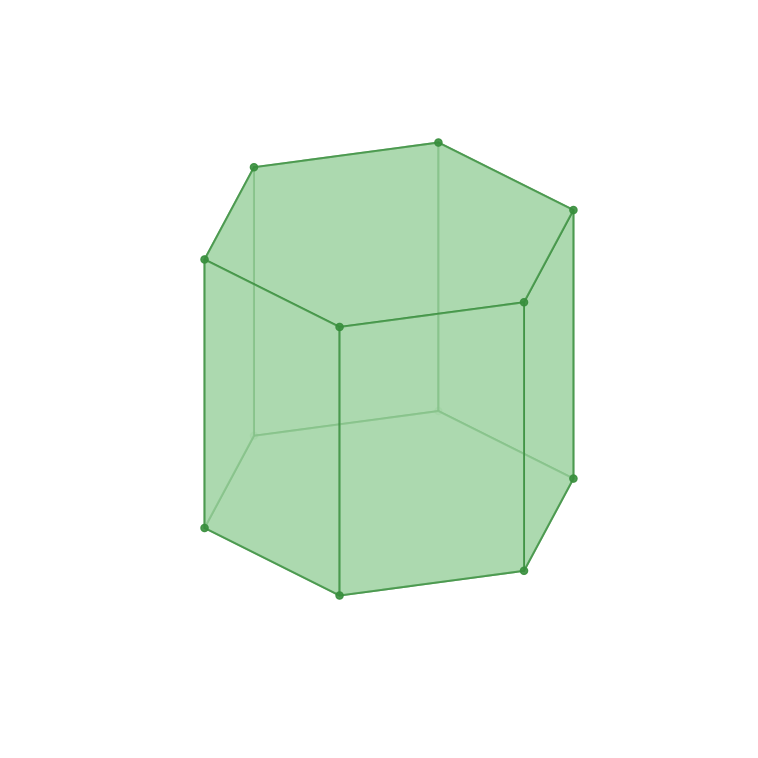
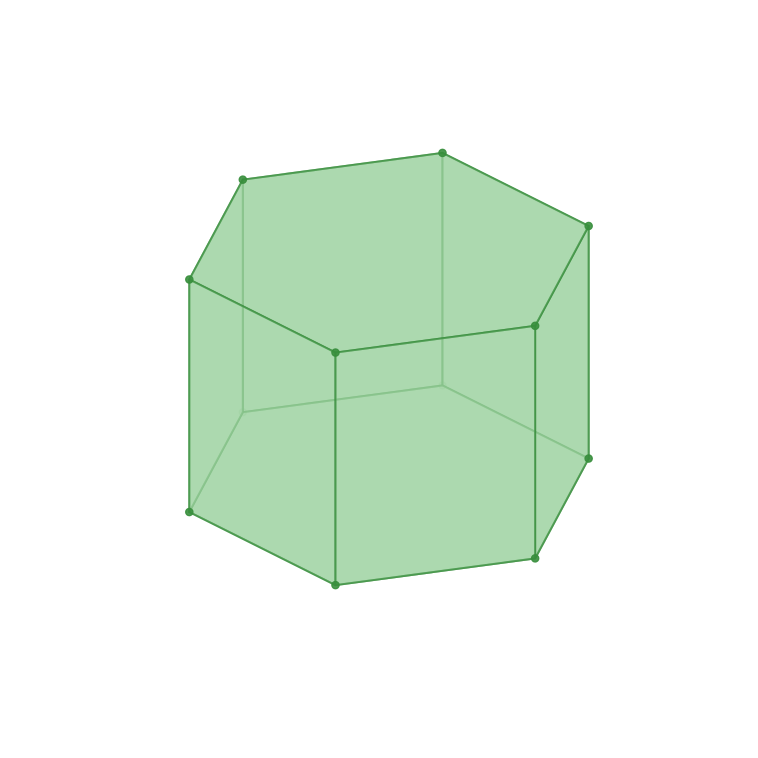
#! System: Hexagonal (6/mmm)
#! Habit: Colourless natural beryl core with green synthetic hydrothermal skin
hexagonal[6/mmm]:({10-10}@1.0 + {0001}@0.6) > ({10-10}@1.1 + {0001}@0.7)
hexagonal
6/mmm
{10-10} {0001} {10-10} {0001}
Quick Facts
Hardness
7.5
Specific Gravity
2.67
Refractive Index
1.565
Optical Character
Uniaxial -
Physical Properties
- Crystal System
- hexagonal
- Hardness (Mohs)
- 7.5
- Specific Gravity
- 2.67
- Cleavage
- Imperfect basal
- Fracture
- Conchoidal
- Lustre
- Vitreous
Optical Properties
- Refractive Index
- 1.565
- Birefringence
- 0.006-0.009
- Optical Character
- Uniaxial -
- Dispersion
- 0.014
- Pleochroism
- strong: Vivid green (ordinary ray) / Bluish-green to colourless (extraordinary ray)
- Fluorescence
- Patchy UV response possible (core and overgrowth differ)
Origin & Identification
- Origin
- Synthetic
- Growth Method
- Hydrothermal-overgrowth-on-natural-seed (synthetic Hydrothermal Cr+V-rich Beryl Overgrowth Deposited On Natural Colourless Beryl Seed — Goshenite Or Pale Aquamarine)
- Manufacturer
- Johann Lechleitner (Innsbruck, Austria)
- First Produced
- 1960
- Diagnostic Features
- Colourless beryl core visible under 10x loupe (transmitted light) — the most immediately apparent feature; lighter colourless goshenite/aquamarine core visible inside green rim; crackled interface — at junction between natural seed and synthetic hydrothermal overgrowth a characteristic crackled or crazing texture develops ("crackled skin" in gemmological literature); different inclusion suites in core vs overgrowth — natural beryl core retains own inclusions (two-phase, growth tubes); synthetic skin shows hydrothermal features (nail-head spicules, chevron zoning); Cr distribution concentrated in outer zone only (Schmetzer et al. 1981 — Cr content analysis confirms synthetic origin of colouring layer); UV fluorescence: mosaic or patchy response possible (natural core vs synthetic skin); FTIR: seed beryl and overgrowth may show different water-related absorptions
Characteristics
Colours
Vivid green (Cr + V chromophores in hydrothermal overgrowth)
Common Inclusions
Colourless beryl core (diagnostic)Crackled interface between core and overgrowthNatural inclusions in core; hydrothermal features (nail-head spicules) in synthetic skin
Notes
CRITICAL CHEMISTRY FIX per VERIFIED.md Conflict 2 (F-01/REJ-02): R10 source listed incorrect formula Be3Al2(SiO3)6:Cr+V — this is a chain-silicate notation and is chemically incorrect for beryl (a cyclosilicate). Correct formula: Be3Al2Si6O18:Cr,V. Applied here per mandatory correction. Multiple API-verified papers: Schmetzer, Bank & Stahle 1981, Gems & Gemology 17(2):98 (DOI 10.5741/gems.17.2.98) [VERIFIED]: "The Chromium Content of Lechleitner Synthetic Emerald Overgrowth" — Cr concentrated in outer synthetic zone. Journal of Gemmology 1964 (DOI 10.15506/jog.1964.9.8.267) [VERIFIED]; Eppler 1968 (DOI 10.15506/jog.1968.11.4.120) [VERIFIED]; Schmetzer & Bank 1988 (DOI 10.15506/jog.1988.21.2.95) [VERIFIED]. Colourless core is definitive diagnostic — absent in natural emerald. Crackled interface is definitive — absent in natural.
Natural Counterpart
The natural gem this synthetic imitates
Related Minerals
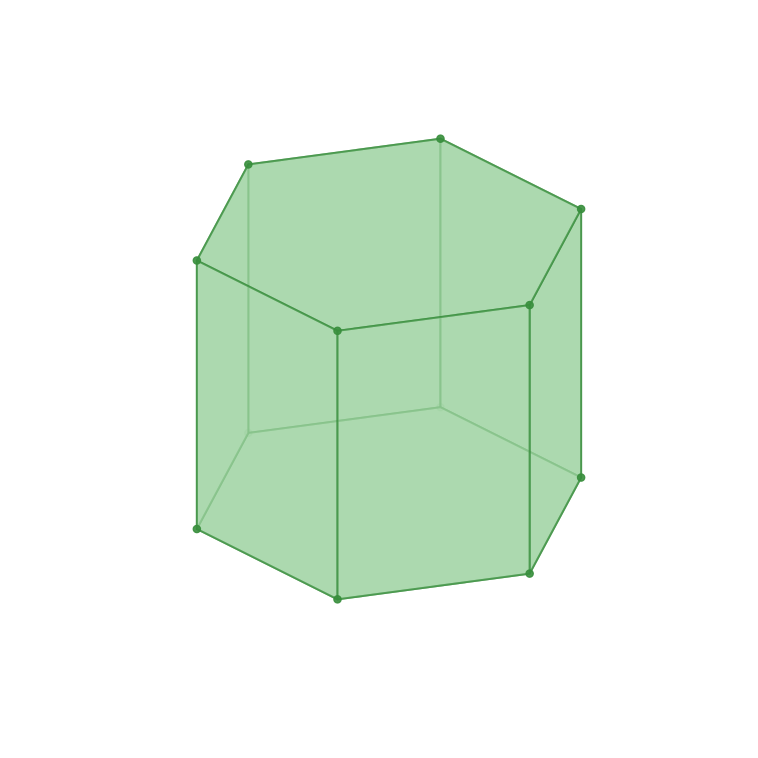
Other minerals in the hexagonal system