hexagonal Cyclosilicates
Maxixe-type Beryl
Formula Be3Al2Si6O18
Crystal Structure
 #! Species: Maxixe-type Beryl (Be3Al2Si6O18; irradiated colour variety)
#! System: Hexagonal (6/mmm)
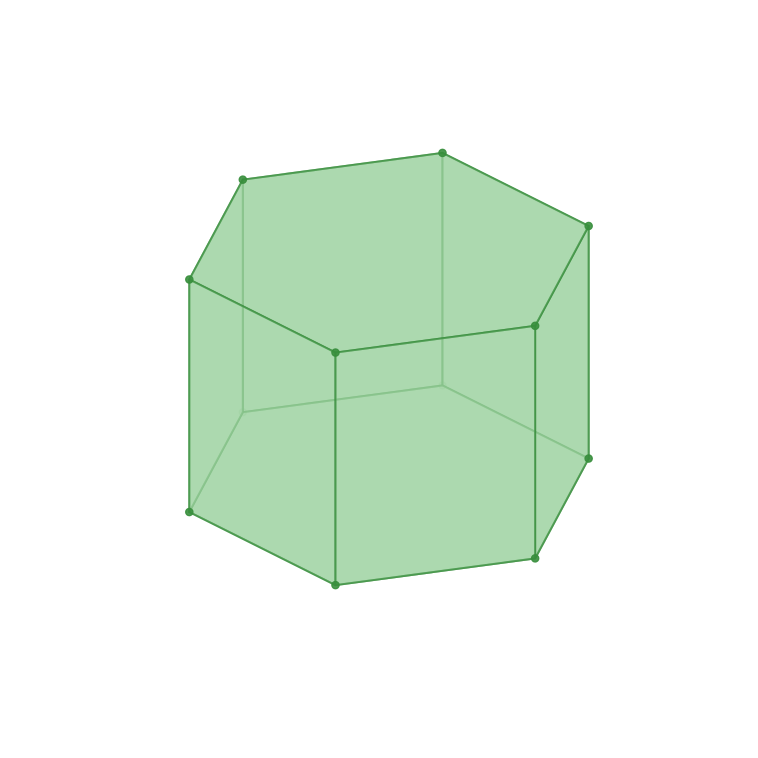
#! Habit: Prismatic hexagonal; deep navy-blue irradiation colour centre
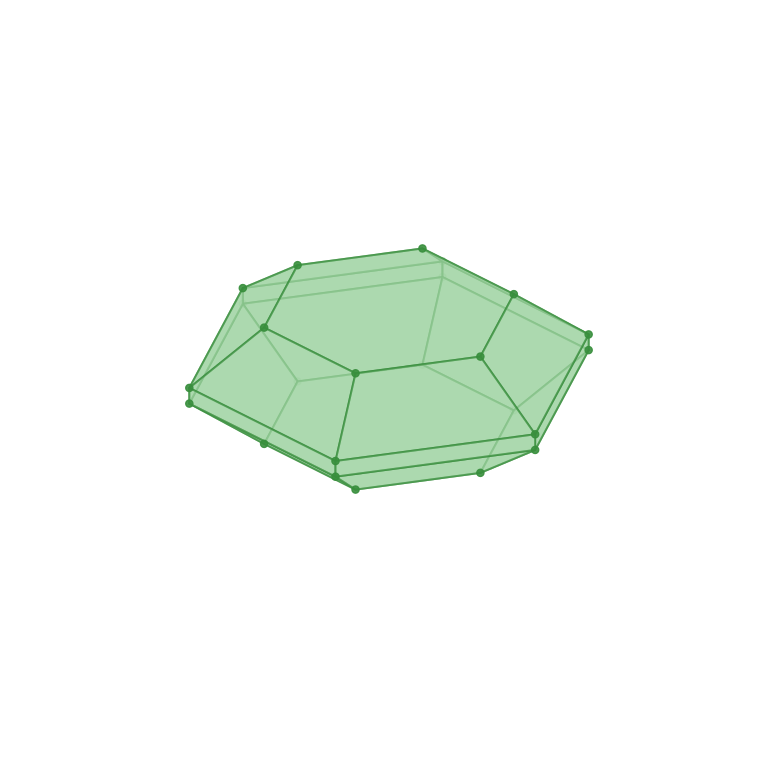
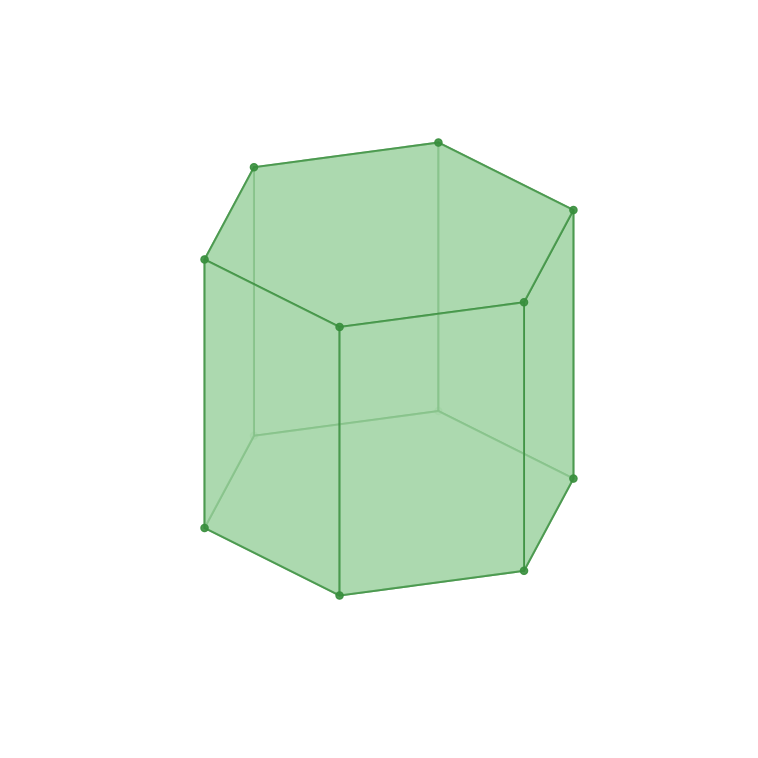
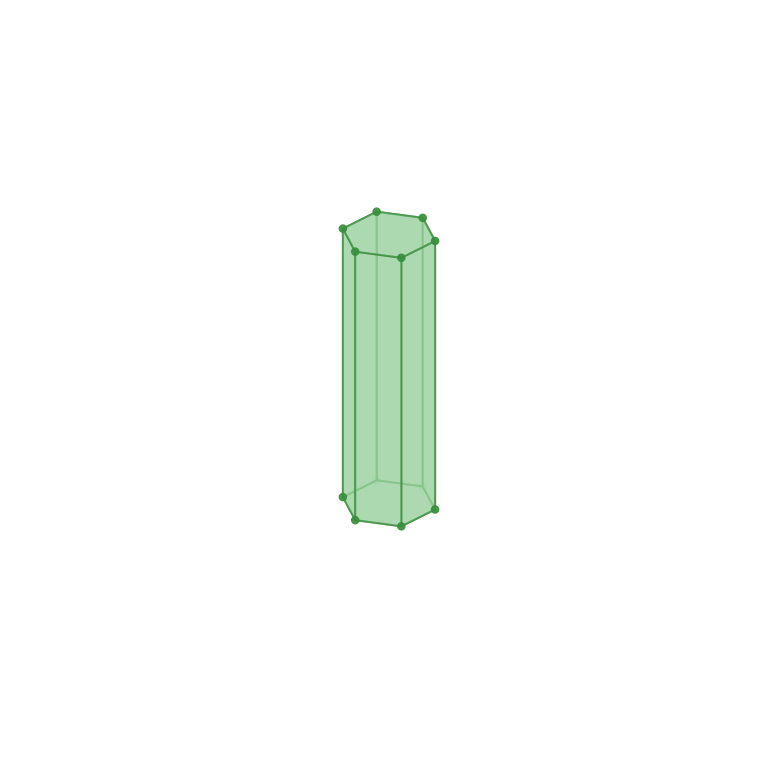
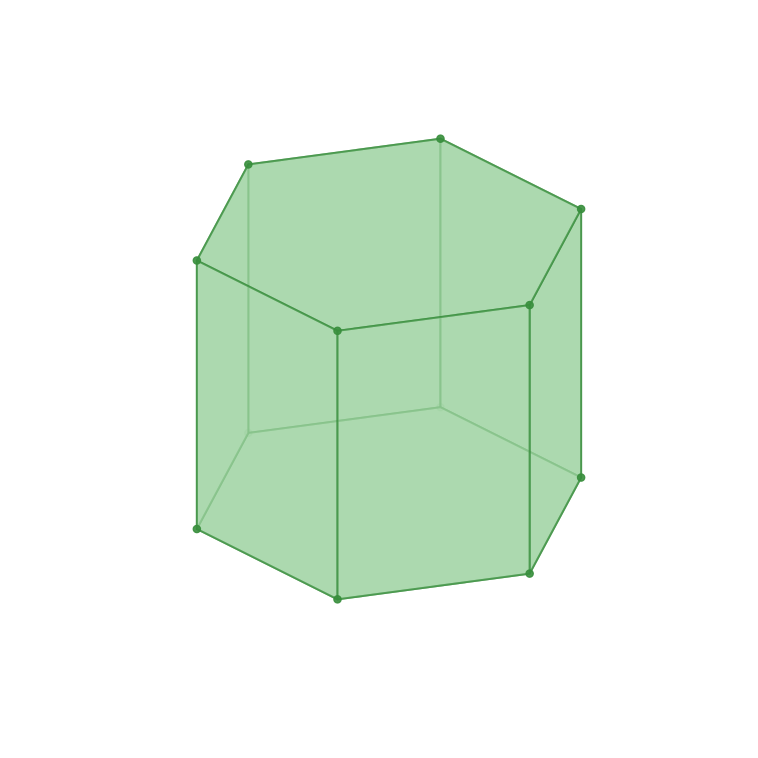
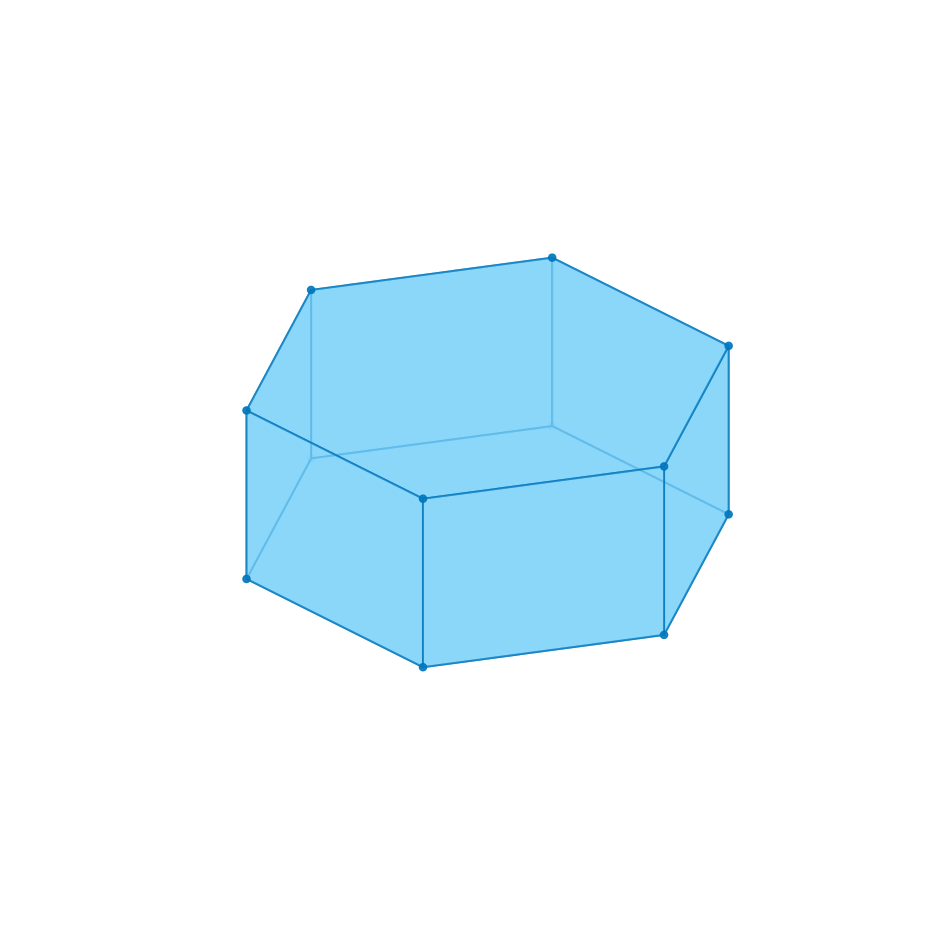
hexagonal[6/mmm]:{10-10}@1.0 + {0001}@0.6
hexagonal
6/mmm
{10-10} {0001}
Quick Facts
Hardness
7.5
Specific Gravity
2.68
Refractive Index
1.563
Optical Character
Uniaxial -
Physical Properties
- Crystal System
- hexagonal
- Hardness (Mohs)
- 7.5
- Specific Gravity
- 2.68
- Cleavage
- Imperfect basal
- Fracture
- Conchoidal
- Lustre
- Vitreous
Optical Properties
- Refractive Index
- 1.563
- Birefringence
- 0.005-0.008
- Optical Character
- Uniaxial -
- Dispersion
- 0.014
- Pleochroism
- strong: Deep blue (ordinary ray) / Colourless to pale blue (extraordinary ray)
Characteristics
Colours
Deep navy to inky blue (much more saturated than aquamarine)
Localities
Brazil (Maxixe mine, Minas Gerais; type locality for naturally irradiated blue beryl; mostly exhausted)Russia (Ural; possible occurrence per Andersson 2011)Any beryl from any locality can produce Maxixe-type colour by artificial irradiation treatment
Common Inclusions
[object Object][object Object]
Known Treatments
The colour itself IS a treatment in commercially sold Maxixe-type (artificial irradiation of colourless or pale beryl)[object Object]
Crystal Forms
prismpinacoid
Diagnostic Features
Deep navy to inky blue much more saturated than aquamarine; strong dichroism deep blue/colourless (stronger than aquamarine blue-green/colourless); CRITICAL: colour FADES on prolonged light exposure (sunlight/UV) — aquamarine does NOT fade; absorption spectrum differs from aquamarine (CO3-related bands ~575, 610, 650-700 nm vs Fe2+ in aquamarine)
Notes
Irradiation-induced deep blue colour variety of beryl (Be3Al2Si6O18). Chemistry per VERIFIED.md conflict resolution F-01: correct cyclosilicate formula Be3Al2Si6O18 (NOT Be3Al2(SiO3)6). Colour centre: CO3^2- or NO3^- ions in beryl channels are irradiated to create the colour centre. NOT caused by Fe2+ (as in aquamarine). Confirmed by Adamo, Pavese et al. 2008, Gems & Gemology 44(3):214-226 (DOI 10.5741/gems.44.3.214) [VERIFIED via live API]: primary modern reference differentiating Maxixe-type from aquamarine and synthetic blue beryl. Also Andersson 2011, Journal of Gemmology 32(5):145 (DOI 10.15506/jog.2011.32.5.145) [VERIFIED]. Colour centre mechanism: Fritsch & Rossman 1988 (DOI 10.5741/gems.24.1.3) [VERIFIED]. CRITICAL TRADE ISSUE: Maxixe-type colour FADES upon prolonged light exposure (UV/sunlight). Aquamarine does NOT fade. This is the single most critical trade distinction. UV lamp test (24-48 hours): Maxixe-type shows noticeable fading; aquamarine unchanged. Disclosure as irradiated fading colour is mandatory. Store in dark; warn customer.
Related Minerals
Other minerals in the hexagonal system